

 2026-05-10
Stakeholders in International Trade and Their Roles in Facilitating the Movement of Goods
Summary In this article, you will learn about the key stakeholders in international trade and the role each party plays in the cross-border movement of goods. The article explains how exporters, freight forwarders, customs brokers, customs authorities, importers, and carriers work together within the international trade process. Understanding these roles helps businesses improve coordination, reduce operational errors, and enhance the efficiency of international trade operations.
Introduction
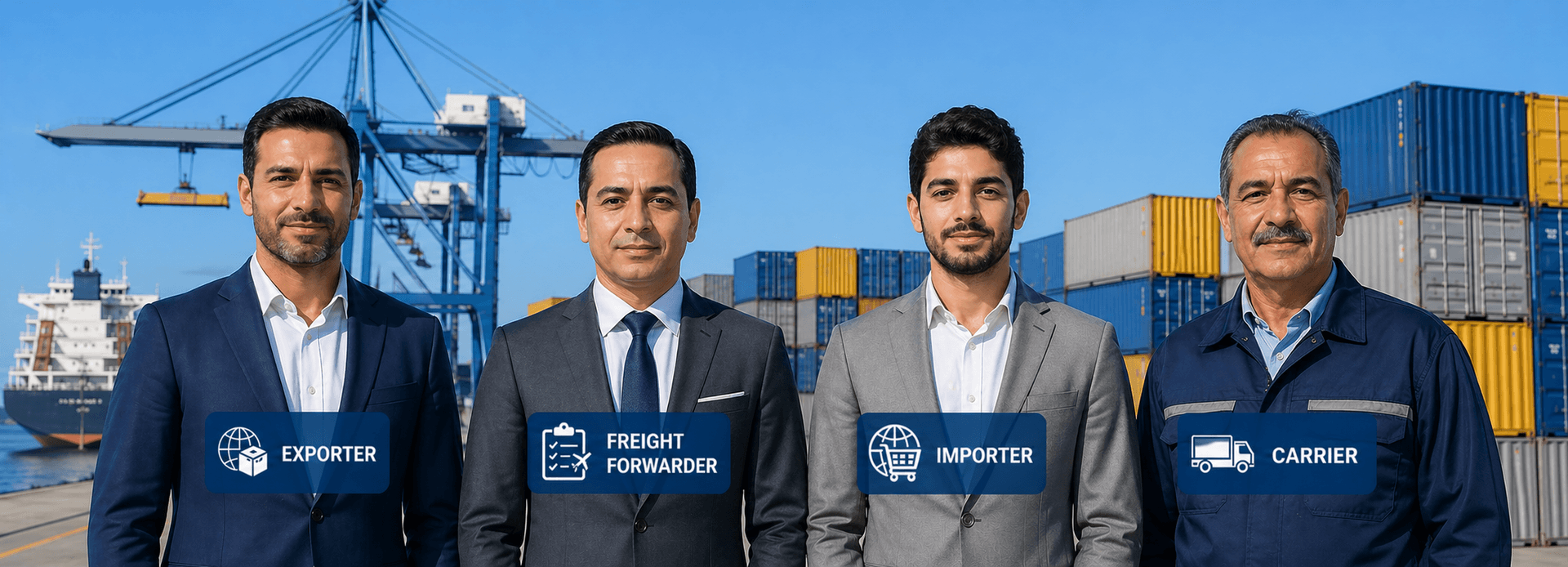
International trade is operationally complex and involves multiple parties. A cross-border commercial transaction is not limited to the seller and the buyer. It includes a wider network of stakeholders that contribute to facilitating the movement of goods from one country to another.
The nature of international trade operations shows that a single shipment may involve several stakeholders, each with a specific role that directly affects execution efficiency, regulatory compliance, documentation accuracy, and the overall flow of goods.
Understanding stakeholders in international trade is not merely a theoretical matter. It is a fundamental element in improving trade performance, establishing clearer relationships between parties, and reducing delays or complications caused by poor coordination or unclear responsibilities.
?Why Is It Important to Understand Stakeholders in International Trade
Every import, export, or international shipping operation depends on the integration of several operational and regulatory roles. When businesses do not clearly understand these roles, the risk of operational disruption increases.
Common challenges may include:
- Poor coordination between parties
- Inaccurate or incomplete shipping documents
- Delays in customs clearance or final delivery
- Higher operational costs
- Reduced supply chain efficiency
When roles and responsibilities are clearly understood, businesses become better equipped to manage shipments, improve communication, and strengthen compliance with local and international regulations.
1. Exporter
The exporter is also referred to as the shipper, consignor, or seller. It is the individual or company that sends goods abroad for sale, distribution, or commercial use.
The exporter is one of the primary parties in the international trade process, as the physical and commercial movement of goods usually begins with this party.
The exporter’s responsibilities typically include:
- Ensuring that the goods meet the requirements of the importing country
- Preparing shipment-related data and commercial information
- Issuing accurate shipping instructions
- Coordinating with the freight forwarder or carrier
- Supporting the documentation and commercial readiness of the shipment
The exporter plays a critical role in the success of the transaction. Any error in product description, shipment data, classification, or shipping instructions may affect the remaining parties across the logistics and compliance chain.
2. Freight Forwarder
The freight forwarder is one of the most important stakeholders in international trade. It is commonly responsible for organizing the shipment of goods on behalf of the exporter or importer and coordinating transport across one or more modes, such as sea, air, road, or multimodal transport.
A freight forwarder typically handles:
- Arranging the transportation of goods from origin to destination
- Coordinating with suitable carriers and shipping lines
- Managing multimodal or intermodal transport when required
- Overseeing key operational aspects of cargo movement
- Assisting with the preparation or coordination of documents required for shipping and customs clearance
The freight forwarder acts as an operational intermediary connecting the exporter, carrier, importer, and in many cases customs clearance parties. This makes its role essential in improving execution efficiency and reducing logistical friction.
3. Customs Broker
The customs broker, also known as a customs clearance agent or customs brokerage company, plays a key role in supporting exporters and importers by advising them on import and export requirements, customs clearance procedures, and official compliance obligations.
Its contribution usually includes:
- Advising on required customs and trade documents
- Explaining relevant customs procedures
- Supporting compliance with regulatory requirements
- Helping reduce errors related to customs declarations and clearance
This role is particularly important in markets where customs procedures are complex or involve multiple regulatory authorities. A customs broker helps improve shipment readiness and reduces the likelihood of delays, penalties, or documentation-related disruptions.
4. Customs Authority
The customs authority is the government body responsible for administering customs regulations, collecting duties and taxes, and monitoring the flow of goods, transport means, and controlled or restricted items entering or leaving the country.
Its role includes:
- Enforcing customs laws and regulations
- Verifying compliance with import and export requirements
- Collecting customs duties, taxes, and related fees
- Monitoring the entry and exit of goods
- Supervising restricted, controlled, or high-risk shipments
Customs authorities play a central role in balancing two important objectives: facilitating legitimate trade on one hand, and protecting national security, public revenue, and regulatory compliance on the other.
5. Importer
The importer is also referred to as the consignee or buyer. It is the individual or company that purchases goods from abroad for resale, production, consumption, or direct use.
The importer is the receiving party and carries an important set of responsibilities related to the arrival and release of goods.
These responsibilities may include:
- Receiving the shipment at destination
- Completing regulatory requirements in the country of import
- Coordinating with the customs broker, customs authority, freight forwarder, or carrier
- Managing the commercial and financial aspects of the import transaction
The accuracy of importer information, as well as its operational and documentation readiness, has a direct impact on the speed of customs clearance and the efficiency of cargo release and delivery.
6. Carrier
The carrier is the company that owns, operates, or provides the transport capacity used to move goods. This may include ocean carriers, airlines, trucking companies, rail operators, or other transport providers.
The carrier is responsible for the physical movement of cargo from one location to another.
Its responsibilities usually include:
- Transporting goods according to the agreed route and terms
- Complying with operational and safety requirements
- Issuing relevant transport documents, such as a Bill of Lading, Air Waybill, or waybill
- Coordinating with relevant parties during the shipment journey
In some cases, the exporter or importer deals directly with the carrier. In other cases, the freight forwarder manages the relationship with the carrier on behalf of the trading parties.
How Do These Roles Work Together in International Trade?
The importance of stakeholders in international trade lies in the fact that no party operates in isolation. Each stakeholder forms part of an interconnected chain of responsibilities.
The exporter initiates the transaction. The freight forwarder organizes the shipment. The carrier executes the physical movement of goods. The customs broker supports regulatory compliance and clearance readiness. The customs authority supervises, verifies, and enforces applicable regulations. The importer completes the process in the destination country.
Any lack of coordination between these parties may result in:
- Shipping or customs clearance delays
- Inaccurate documentation
- Increased costs
- Operational and legal complications
- Lower supply chain reliability
For this reason, understanding the relationship between these stakeholders is not only useful, but essential for building more stable, professional, and resilient international trade operations.
The Impact of Clear Roles on International Trade Efficiency
The clearer the roles and responsibilities are, the greater the ability of businesses to manage international trade operations effectively.
Clear role allocation helps companies:
- Improve communication with relevant parties
- Reduce duplication and operational errors
- Increase planning and execution efficiency
- Strengthen compliance with local and international regulations
- Build more sustainable commercial relationships
In a competitive and complex trade environment, this clarity becomes an important factor in supporting business growth, reducing operational risk, and improving supply chain performance.
The Role of Across MENA
At Across MENA, we believe that the success of trade operations does not depend only on moving shipments. It depends on connecting different stakeholders within a clearer, more efficient, and digitally enabled ecosystem.
For this reason, Across MENA is developing digital solutions that facilitate coordination between trade stakeholders and support integration across transportation, customs clearance, and logistics services.
Our objective is to help businesses reduce operational friction, improve readiness, and strengthen compliance in regional and international trade.
Frequently Asked Questions
Who are the stakeholders in international trade?
Stakeholders in international trade are all parties directly or indirectly involved in executing a cross-border commercial transaction. They include exporters, importers, freight forwarders, customs brokers, customs authorities, and carriers.
What is the role of the exporter in international trade?
The exporter is the party that sends goods abroad. It is responsible for preparing shipment data, providing accurate shipping instructions, and ensuring that the goods comply with the requirements of the importing country.
Why is the freight forwarder important?
The freight forwarder organizes the transportation process, coordinates with carriers, and helps manage the operational and documentation aspects related to the movement of goods.
What is the difference between a customs broker and the customs authority?
A customs broker provides advisory and procedural support for customs clearance. The customs authority is the government body responsible for enforcing customs regulations, collecting duties and taxes, and monitoring the flow of goods.
How does understanding these roles help businesses?
Understanding these roles helps businesses improve coordination, reduce errors, increase operational efficiency, strengthen compliance, and build more reliable and sustainable trade relationships.