
Types & Dimensions of Land Trucks
Explore the types of trucks used in land transportation and learn about their dimensions and operational capacities to help you choose the most suitable truck for your shipment, whether it includes general, refrigerated, heavy, or special-loading cargo.
Selected Truck:
Tipper (Dump Truck)
Open Body
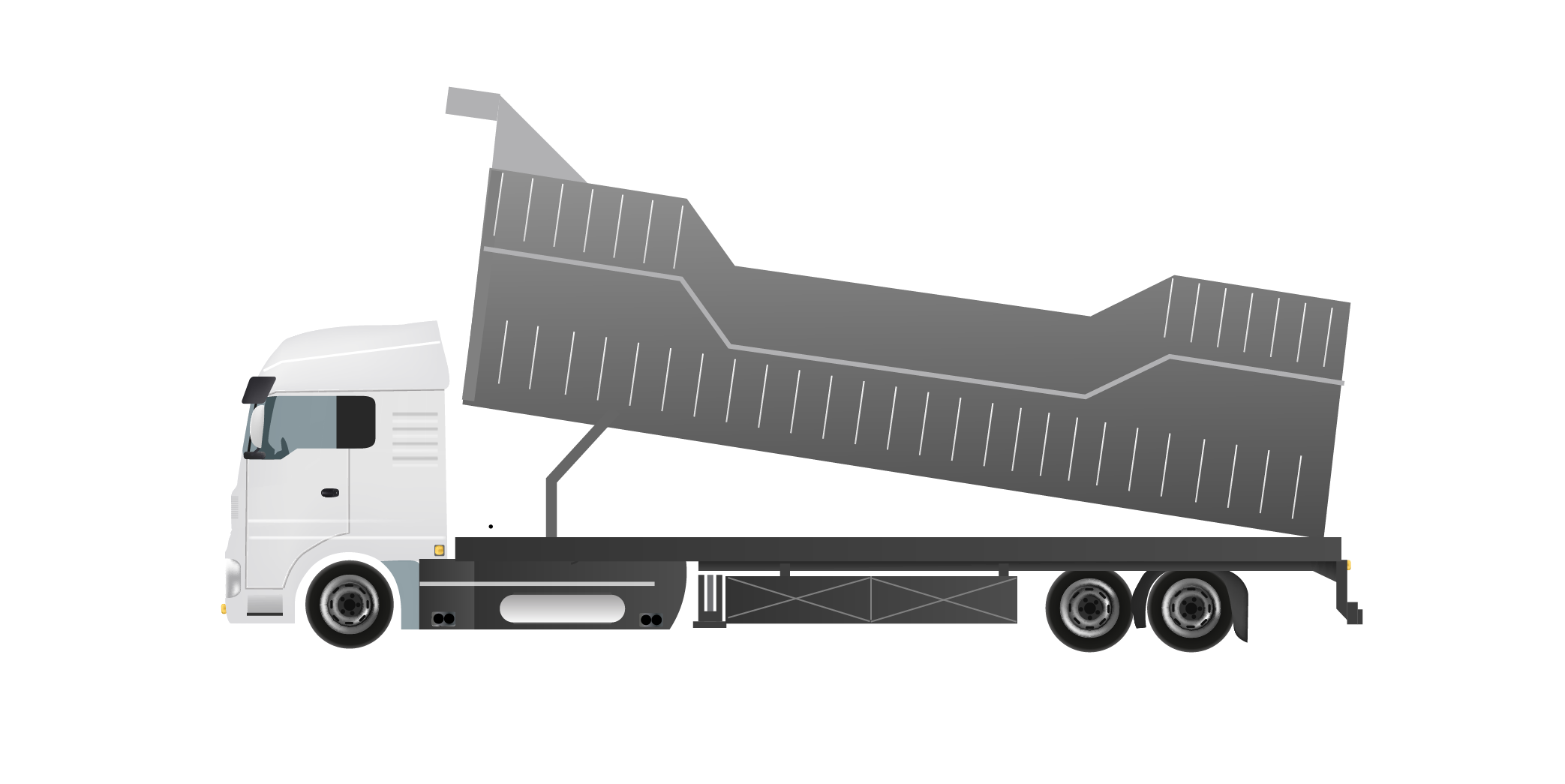
Length
- Overall
- 10,500 mm
- Cargo Area
- 6,500 mm
Width
- Overall
- 2,500 mm
- Cargo Area
- 2,350 mm
Height
- Overall
- 3,800 mm
- Cargo Area
- 1,500 mm
| Dimension | Overall | Cargo Area |
|---|---|---|
| Length | 10,500 mm | 6,500 mm |
| Width | 2,500 mm | 2,350 mm |
| Height | 3,800 mm | 1,500 mm |
The displayed measurements are indicative, and it is recommended to confirm the actual dimensions and payload capacity before selecting the truck type for shipment.

FAQ
Frequently Asked Questions — Truck Types for Land Freight
Clear answers about land freight truck types — from semi-trailers and reefers to flatbeds and lowbeds — and how to choose the right truck for your cargo.
Common types include: semi-trailer (tractor and trailer / curtainsider), refrigerated truck (reefer), flatbed truck, lowbed trailer, box truck, and tanker truck. The appropriate type is determined based on cargo nature, weight, dimensions, and loading method.
The tractor is the powered unit with the engine and cab. The trailer is the cargo-carrying unit attached to the tractor. This combination is used for large shipments and long-distance transport.
A curtainsider is a truck or trailer with retractable side curtains that allow easy loading and unloading from the sides. It is used for general cargo, palletised goods, and packaged freight.
A reefer truck is equipped with a refrigeration unit to maintain a specific temperature during transport. It is used for cargo requiring cooling or freezing — such as food, pharmaceuticals, and temperature-sensitive products.
A flatbed is a truck or trailer with an open loading surface and no enclosed body. It suits machinery, equipment, and cargo that can be loaded from above or the sides.
A lowbed is a low-deck trailer used to transport heavy machinery, equipment, or oversized cargo that exceeds the height limits of standard trailers, depending on dimensions and weight.
A container truck is equipped with a chassis designed to carry shipping containers, such as 20ft or 40ft containers. It is used to transport containers between ports or depots and loading or delivery locations.
A box truck has an enclosed body that protects cargo from weather conditions. It is used for general and packaged goods that do not require refrigeration.
A tipper truck has a hydraulically operated body that can be raised to unload bulk materials such as soil, gravel, sand, or construction materials. It is not typically used for packaged or fragile cargo.
Truck selection should be based on: cargo type, total weight, length, width and height, loading and unloading method, refrigeration or protection requirements, and route conditions. Selecting a truck based on payload capacity alone is not sufficient.